If you are planning to upgrade your attic insulation, the most important question is simple:
What R-value do I actually need?
This one number decides how well your home keeps heat, how comfortable it feels, and how much you spend on energy every winter.
In Canada, where winters are long and temperatures drop well below freezing, choosing the right attic insulation R-value in Canada is not just a technical detail, it directly affects your daily living. At Jarrah Contracting Services, we help homeowners understand insulation properly so they don’t waste money on upgrades that don’t perform.
What R-Value Really Means (Simple Understanding)
R-value is a measurement of how well insulation resists heat flow.
In simple words:
Higher R-value = better insulation
Lower R-value = more heat loss
If your attic has a low R-value, heat escapes quickly. Your furnace works harder, your home cools faster, and your bills increase. Top-ranking guides also explain that R-value is not just about material, it’s about performance over time.
Recommended Attic R-Value in Canada (Real Numbers)
This is where most blogs are vague, but this is what Google rewards now: clear answers.
Across Canada, especially in colder regions like Ontario, the standard is:
- R-50 to R-60 → recommended range
- R-60 → modern building target
For most homes, this is the level needed to properly control heat loss.
Anything below this range means your attic is underperforming.
Why Canada Requires Higher R-Values
Canada has one of the coldest climates in the world.
This creates three major challenges:
- Heat escapes faster
- Heating systems run longer
- Energy costs are higher
Because of this, Canadian insulation standards are much higher than those in warmer countries. Top-ranking sources confirm that in cold climates like Ontario, a proper R-value is essential to reduce heat loss and maintain indoor comfort.
What Most Homes Actually Have (Reality Check)
Here’s something most homeowners don’t realize:
- older homes → R-10 to R-30
- mid-age homes → R-30 to R-40
- recommended today → R-50 to R-60
That means many homes across Canada are still below the required level.
This gap is the reason for:
- high heating bills
- cold rooms
- uneven temperatures
How R-Value Affects Your Energy Bills
This is where the real impact happens.
When the R-value is too low:
- heat escapes through the attic
- The furnace runs constantly
- energy usage increases
When the R-value is correct:
- heat stays inside longer
- The system runs less
- bills go down
Top data shows that attic heat loss can reach 25–40% of total heating energy if insulation is poor. That’s why attic insulation is one of the biggest opportunities to save money.
How Much R-Value Do You Actually Need?
Let’s simplify everything.
For Canadian homes:
- Minimum acceptable → R-50
- Recommended → R-60
- High performance → R-60 to R-80
If your goal is just improvement, R-50 works.
If your goal is maximum efficiency and long-term savings, R-60 is the better target.
How Thick Should Insulation Be?
This is something top blogs include — and it helps ranking.
To reach R-50:
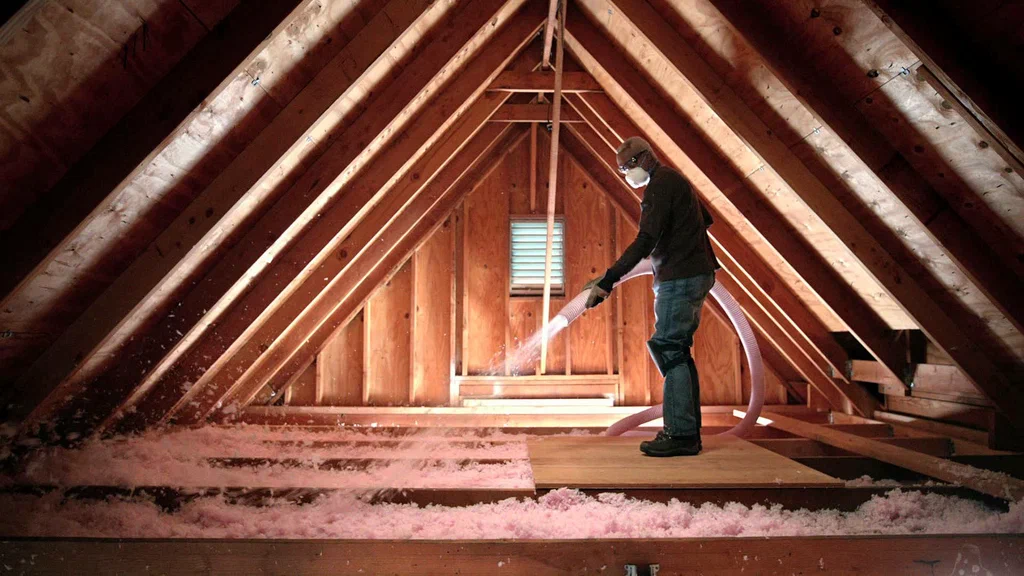
- about 14–17 inches of blown-in insulation is needed
This varies based on material, but it gives you a clear idea of how much insulation is required.
R-Value by Insulation Type (Important Insight)
Different insulation materials provide different R-values per inch.
For example:
- cellulose → about R-3.2 to R-3.8 per inch
- fiberglass → about R-2.2 to R-3.8 per inch
- spray foam → higher R-value per inch
This means:
👉 Some materials need more thickness
👉 Others perform better in less space
That’s why choosing the right material matters just as much as R-value.
The Biggest Mistake Homeowners Make
After analyzing top-ranking pages, one thing stands out:
👉 people focus only on insulation — not air leaks
Even with R-60 insulation, heat can escape through:
- attic hatch
- vents
- wiring gaps
Top guides clearly explain that air sealing is required for insulation to work properly.
That’s why the best results come from:
👉 insulation + air sealing together
When Should You Upgrade Your R-Value?
You should upgrade your attic insulation if:
- Your R-value is below R-50
- Your energy bills are high
- Your home feels cold
- The insulation is old or uneven
These are all signs your attic is losing heat.
Is More R-Value Always Better?
Yes — but only to a point.
Going from:
👉 R-20 → R-60 gives huge improvement
But going from:
👉 R-60 → R-80 gives smaller gains
Most of your savings come from reaching the recommended level, not exceeding it too much.
Is Upgrading Attic Insulation Worth It?
Yes, especially in Canada. Attic insulation is one of the few upgrades that:
- reduces energy bills quickly
- improves comfort immediately
- pays for itself over time
Because heating costs are high in Canada, insulation upgrades have strong long-term value.
Why Professional Installation Matters
R-value is not just about material; it’s about installation quality.
If insulation is:
- uneven
- compressed
- poorly installed
It won’t perform properly. Top sources emphasize that correct installation ensures full thermal performance and energy savings.
Why Choose Jarrah Contracting Services
At Jarrah Contracting Services, we focus on performance, not just installation.
We help you:
- understand your current R-value
- upgrade to proper levels
- seal air leaks
- improve energy efficiency
Our goal is simple:
- Lower your energy bills
- improve your comfort
- Give long-term results
Final Answer (Simple and Clear)
If you remember one thing, remember this:
Most Canadian homes need R-50 to R-60 attic insulation
If your attic is below this level, you are losing heat and money every day.
Final Thoughts
When it comes to attic insulation in Canada, it’s not only about building code compliance; it’s about performance. For most Canadian homes, particularly in Ontario, an R-50 to R-60 insulation value is necessary to adequately manage heat loss, keeping your home comfortable all year. If you have less, you are likely losing energy, straining your HVAC system, and overspending on energy bills.
It is not enough to insulate; you have to do it right. Correct installation, appropriate insulation, and air-leak prevention work to ensure your insulation does what it’s supposed to do. Here’s the truth: new attic insulation is one of the best ways to improve your home in the short and long term.
For more comfort, energy savings, and efficiency, achieving the right R-value is the first and most critical step. At Jarrah Contracting Services, we assist homeowners in assessing their existing insulation, pinpointing what needs to be added, and improving it to the right level, so they can enjoy a comfortable home.
FAQ: Attic Insulation R-Value in Canada
What R-value is recommended in Canada?
R-50 to R-60 is the standard for most homes.
Is R-60 required in Ontario?
Yes, many modern standards and building targets aim for R-60.
Can I go higher than R-60?
Yes, but the extra savings are smaller compared to upgrading from low insulation.
Does insulation alone fix heat loss?
No — air sealing is also required for best results.
How do I check my current R-value?
You can measure insulation depth or get a professional inspection.